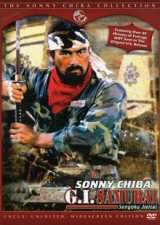
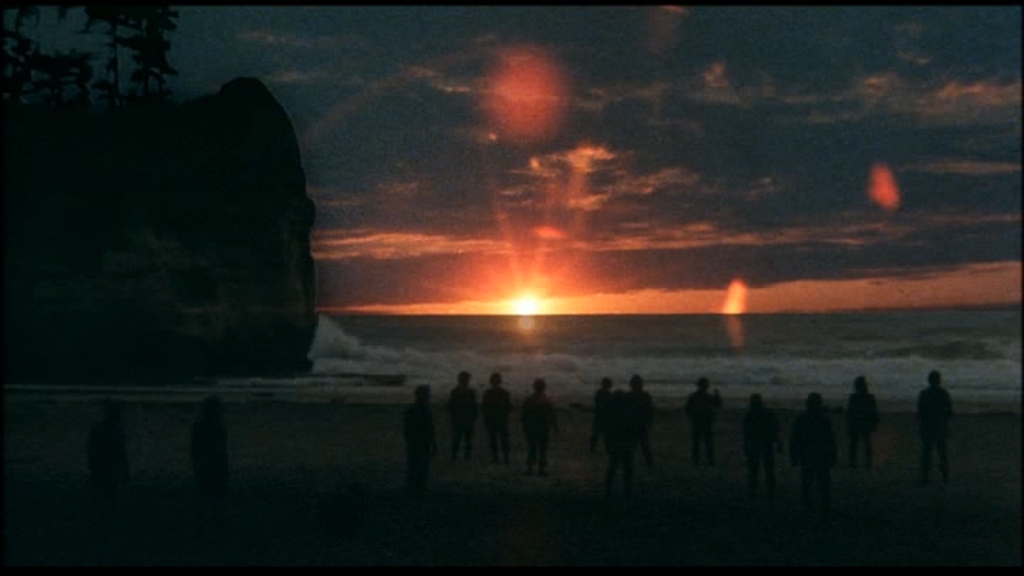
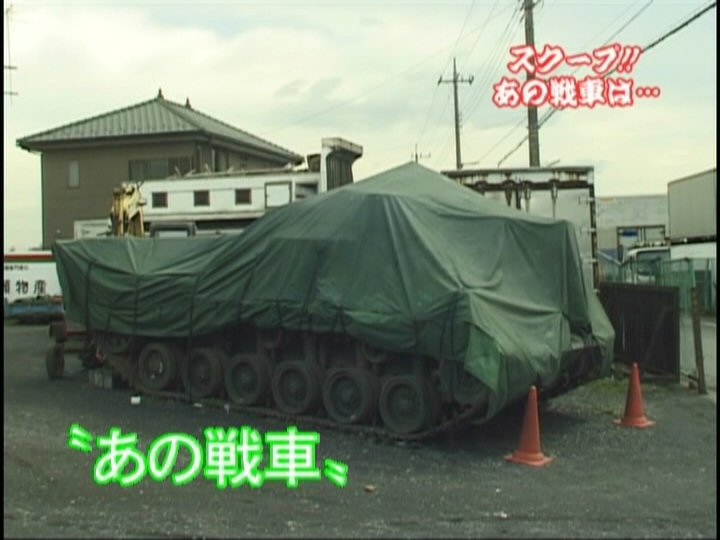
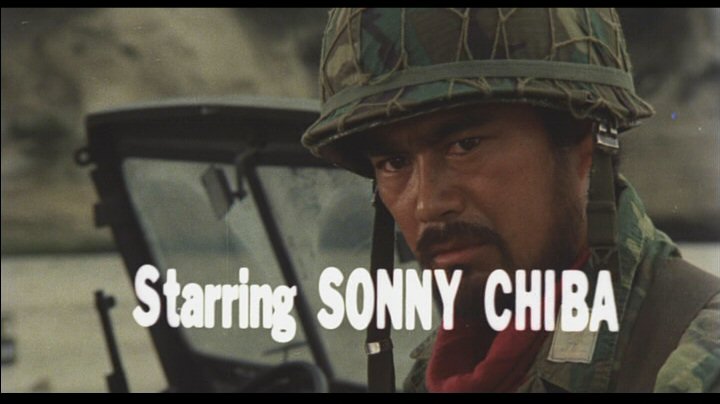
Business genius, narcotics crimimal, and the reformer of Japanese entertainment industry, producer Haruki Kadokawa took rule of his father’s company Kadokawa Heralds in the mid 70’s. Haruki Kadokawa’s strategy was to produce large scale, Hollywood type films and support them with aggressive advertising campaign and simultaneous supplementary releases. For his 1978 Ken Takakura film Never Give Up Kadokawa borrow military equipment from the US army. G.I. Samurai (aka Timeslip), based on a hit novel by Ryo Hanmura, continues on the same path. Shinichi Chiba plays an army commander whose platoon that is thrown back in time to the 16th century. With no way back to their own time, the men must fight for they life and ally with warlord Nagao Kagetora (aka Kenshin Uesugi) (Isao Natsuagi).
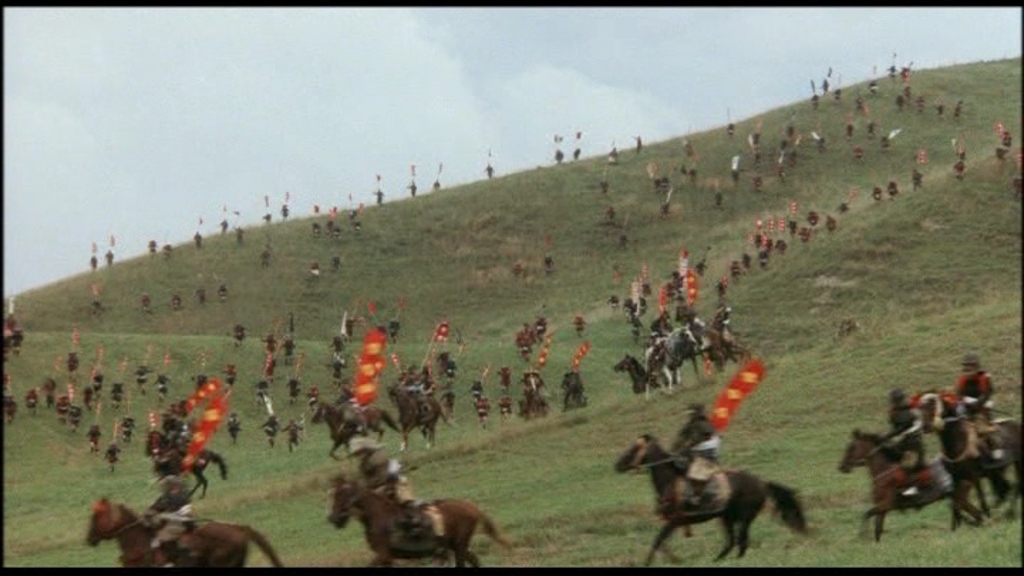
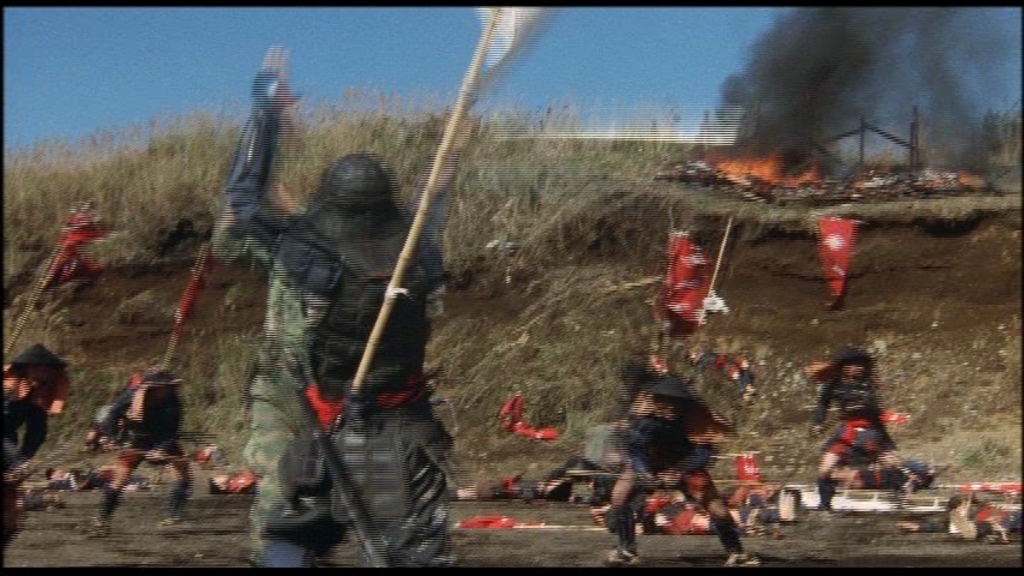
G.I. Samurai is a slightly uneven but unique action film. Kadokawa has put enough money into the project to cover three Street Fighter trilogies. The investment shows; the climatic 25 minute battle scene featuring trucks, a battle helicopter, and hundreds of extras is possibly the most massive action piece created in the history of Japanese cinema. It's also one of the most intense scenes in any war movie; a few dozen heavily armed men fighting an enemy of thousands. The film's tone is rather dark at times; power corrupts one character after another, and when stripped of their responsibilities the modern soldiers turn into savages. Still, G.I. Samurai is primarily an entertainment film and should be reviewed as one. There are some weaknesses such as overlong ending, and use of music that varies between clumsy and brilliant. Supporting roles feature loads of brief appearances by current and upcoming stars; idol Hiroko Yakushimaru, action star Hiroyuki Sanada, karate villain Masashi Ishibashi, producer Haruki Kadokawa himself, and many others. The film also takes the opportunity to re-write history. Many characters appearing in the film are real 16th century warlords. The viewers will finally get to discover the real cause of death of Shingen Takeda!
Different Edits
The original Japanese version runs approximately 139 minutes. All recent dvd editions listed in the Available DVDs section (see a couple of chapters below) feature this version of the film. However, for its original US theatrical release the film was heavily cut. Some sources state 81 minutes as the running time. 117 minute version was released in Norway and also screened in Finland in 2008. All versions released in the UK, up till this day, are censored for horse falls. Below I have described the main differences between the original Japanese cut and the old UK VHS, which runs 88 minutes. It's possible this is the same version as the original US print, apart from the UK censorship. The listing below features spoilers, but in short the old US cut removes all characterization, sex and psychological themes from the film. This leads into continuity problems such incomprehensible decisions made by characters, villains killed for almost no reason (their crimes are never seen in the film) and bullets coming from the wrong direction because the preceding shot has been removed.
- The opening is shorter.
- All modern day footage (apart from the opening) has been removed (some music is missing or re-placed because of this)
- Almost all conversations between supporting characters have been removed.
- Rebel soldier (Tsunehiko Watase) killing another soldier with a knife is missing.
- (Slightly homoerotic) footage of Iba and Kagetora riding horses on the beach is missing.
- Footage of destroyed villages and women being raped is missing.
- The boat vs helicopter battle is shorter. There’s no sniper (Koji Naka). The villain dies of Chiba's bullets.
- The sex scene featuring the widow is missing.
- Loads of horse falls are either cut out or replaced with still images (probably UK exclusive)
- Kagetora negotiating with other warlords before the ending is missing.
- Iba turning evil before the final scene is missing.
Ironically, the only scene truly in a need of shortening, the ending, is almost intact. New ending credits have been placed on top of the footage, but the scene is still several minutes too long.